Homemade Rust Remover Experiment
September 24, 2026
One of the many things I enjoy is restoring old things that might otherwise be thrown out. Sometimes it involves repairing things, other times it's just resurfacing/refinishing the item.
In the past, whenever I need to remove surface rust, like on old tools I acquired from tag sales, I've used Evaporust. This is pretty expensive by weight, especially if you use it several times a year. Recently, though, I've come across a few homemade recipes that people swear by and have done extensive testing with. I decided to go with the recipe tried and tested by "Backyard Ballistics". I came across the video and recipe on this machinist forum.
I happen to like homemade recipes when I have the time, because if they're successful, they are remarkably economical. Why do we buy everything from stores that are marked up in price just because we haven't bothered to try it at home first? This is the same idea behind cooking at home versus going out to restaurants.
The Recipe
- 1L water (4.2 cups)
- 100g Citric Acid
- 40g Sodium carbonate
- OR 63g Sodium bicarbonate (baking soda)
- OR 30g sodium hydroxide
- Some dish soap to act as a surfactant
Weighing out the ingredients
I used an old kitchen scale and measuring bowls I've set aside for non-culinary uses/home experiments to measure out everything by weight, and a purple plastic container I usually use for rust removal. It's not a perfect size for all the tools I tested, but it fit them well enough.
Mixing Everything Together
I mixed everything together, and once the bubbles settled down, put a splash of dish soap in and stirred. Then I placed my rusty test subjects in, and let sit for a day.
The Results
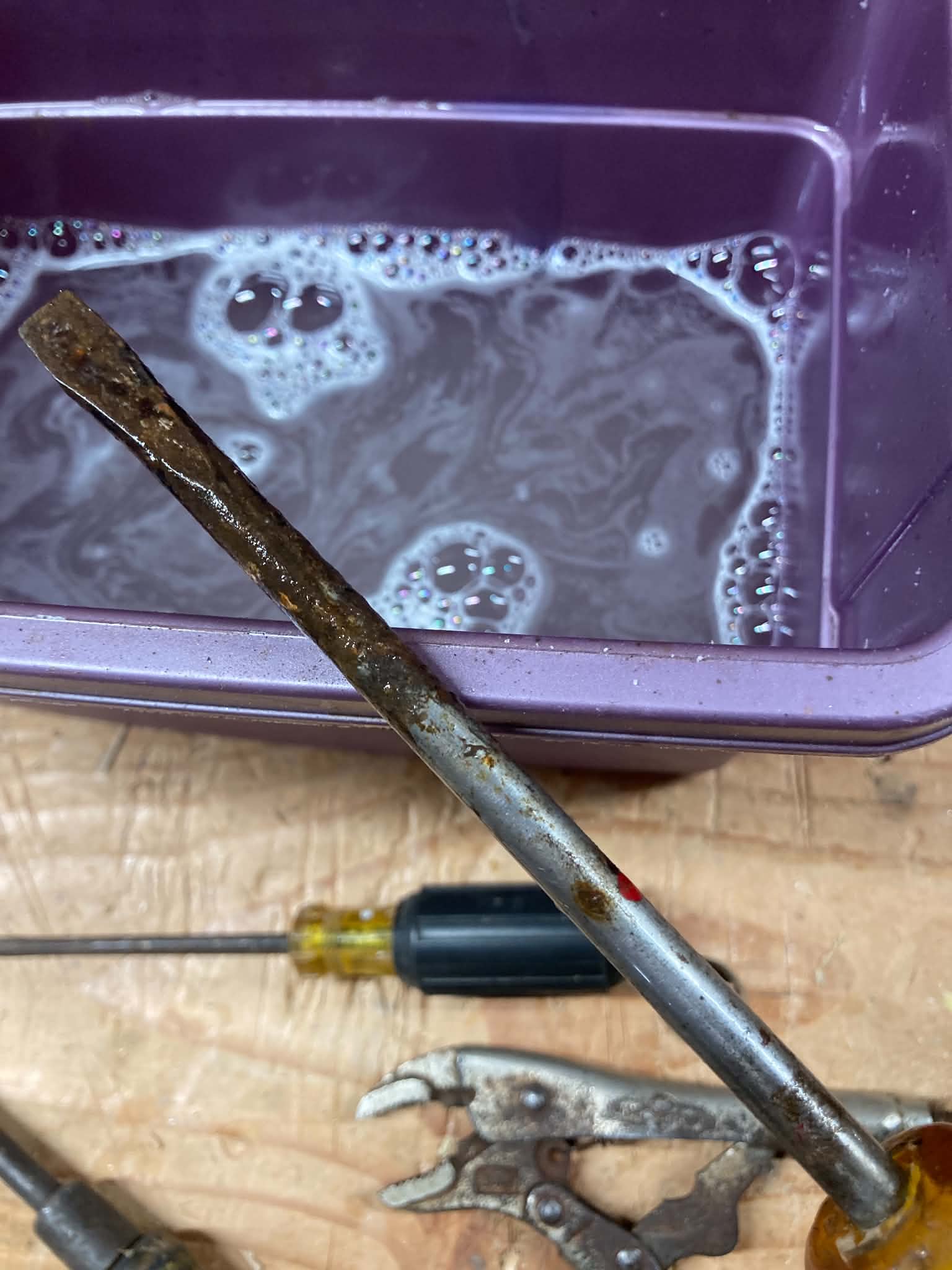
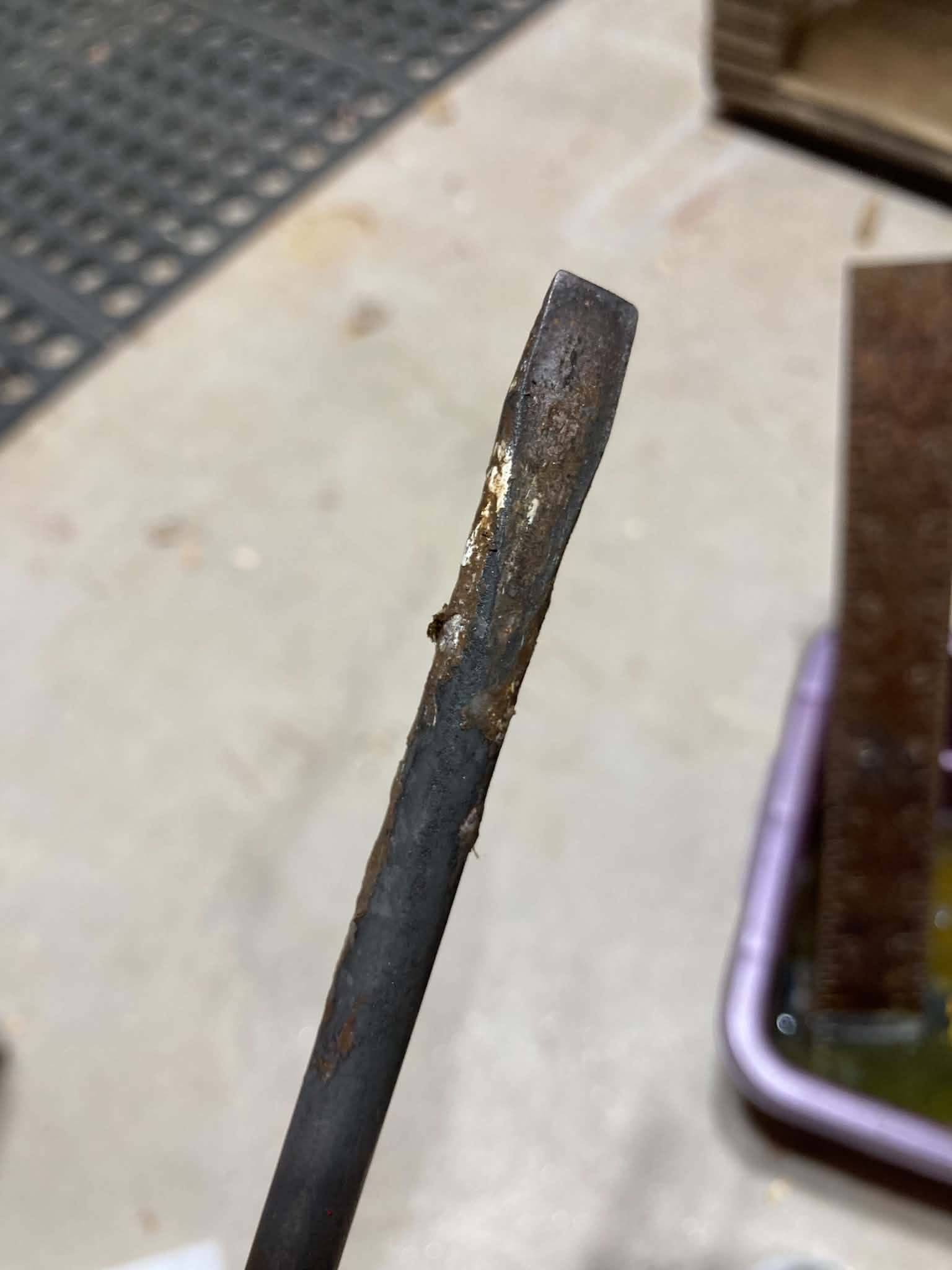
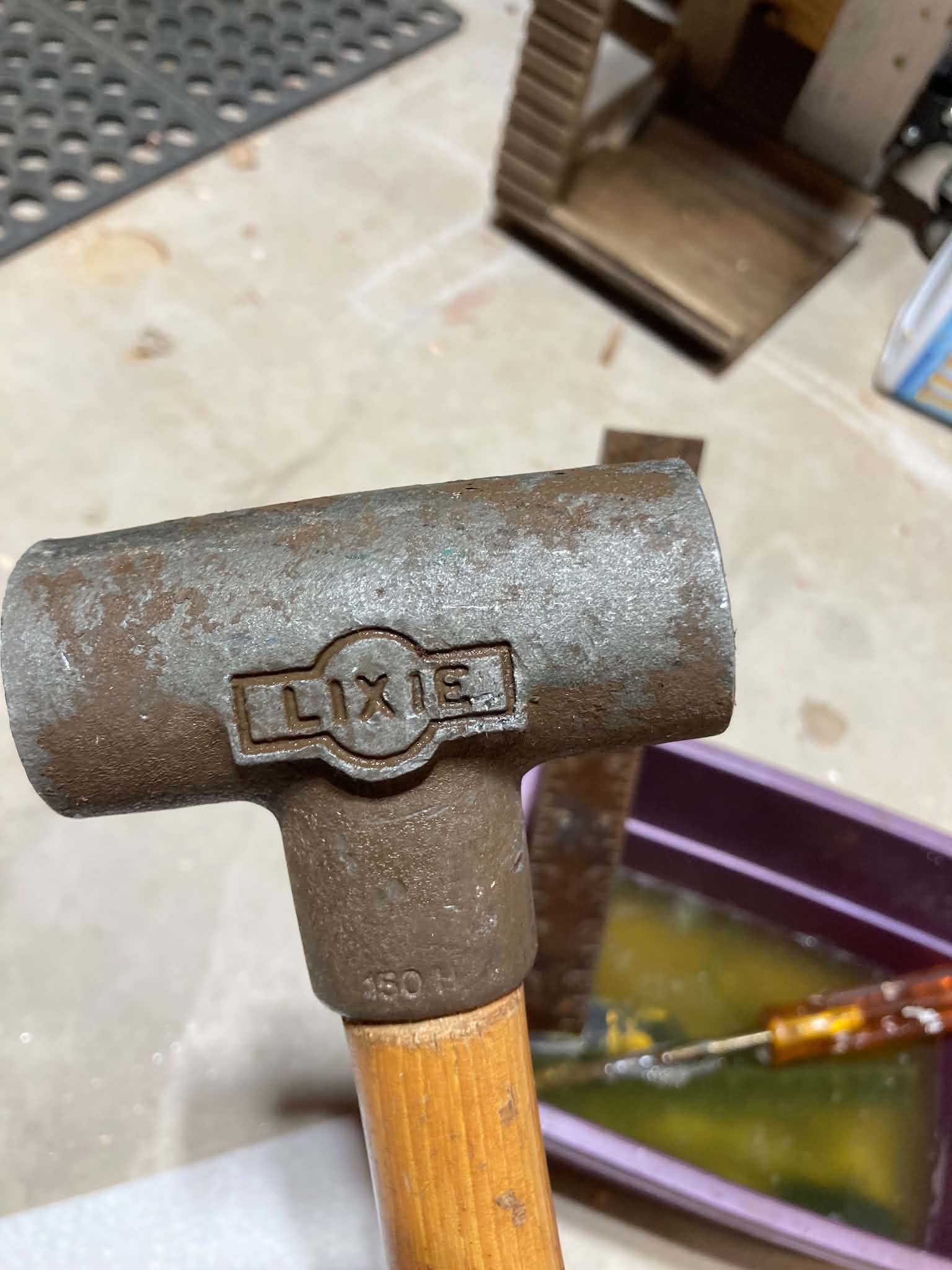
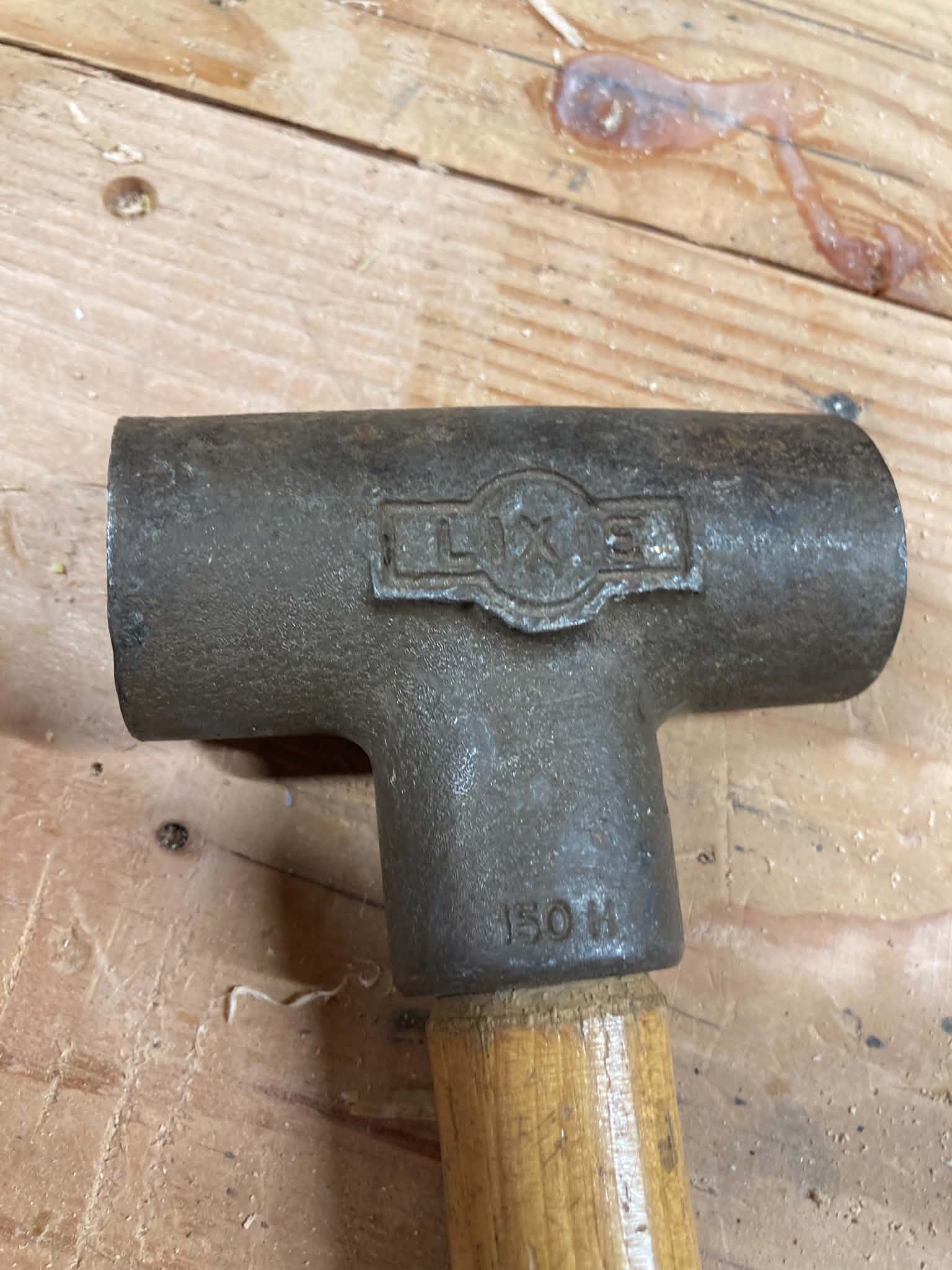
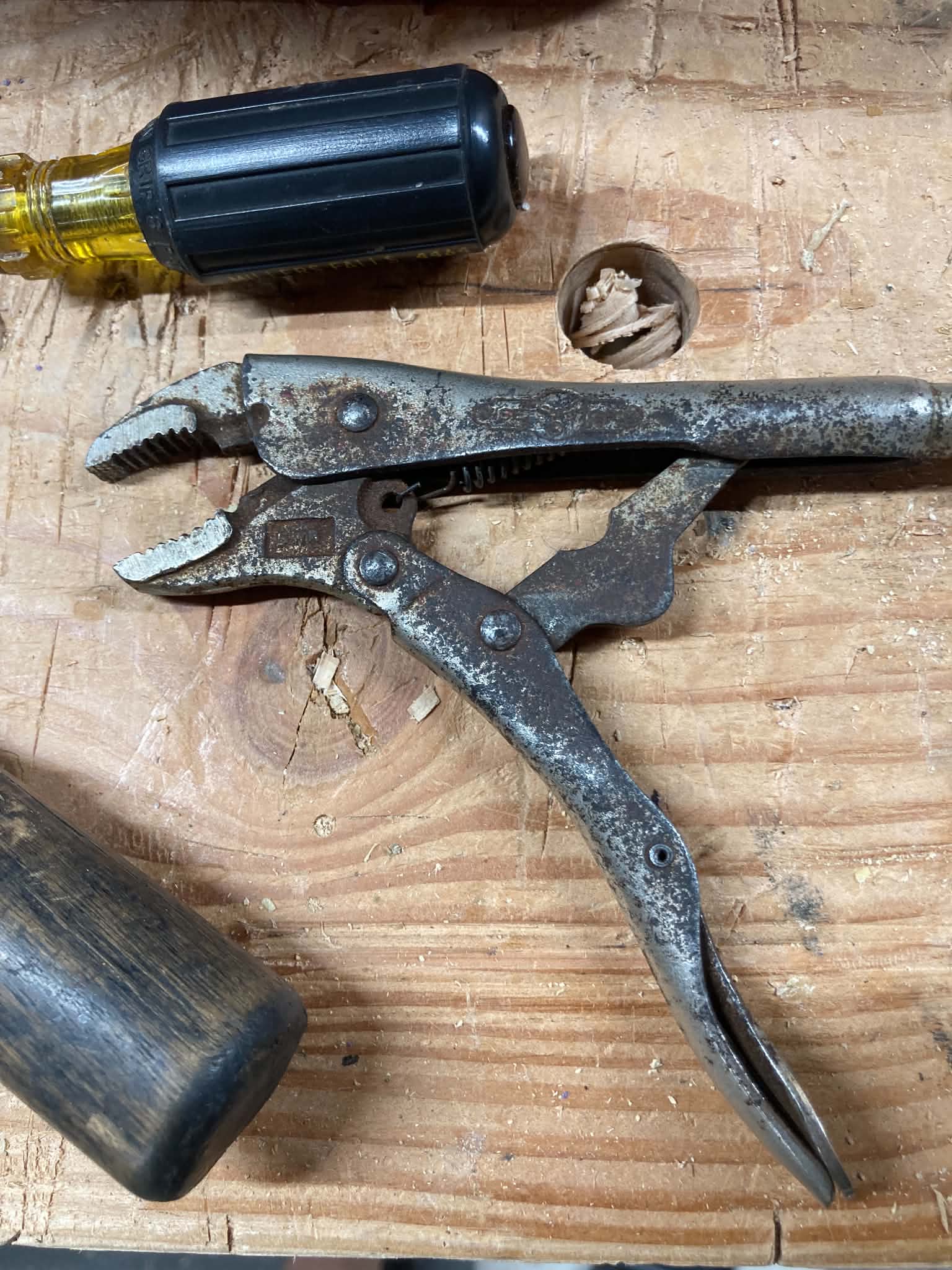
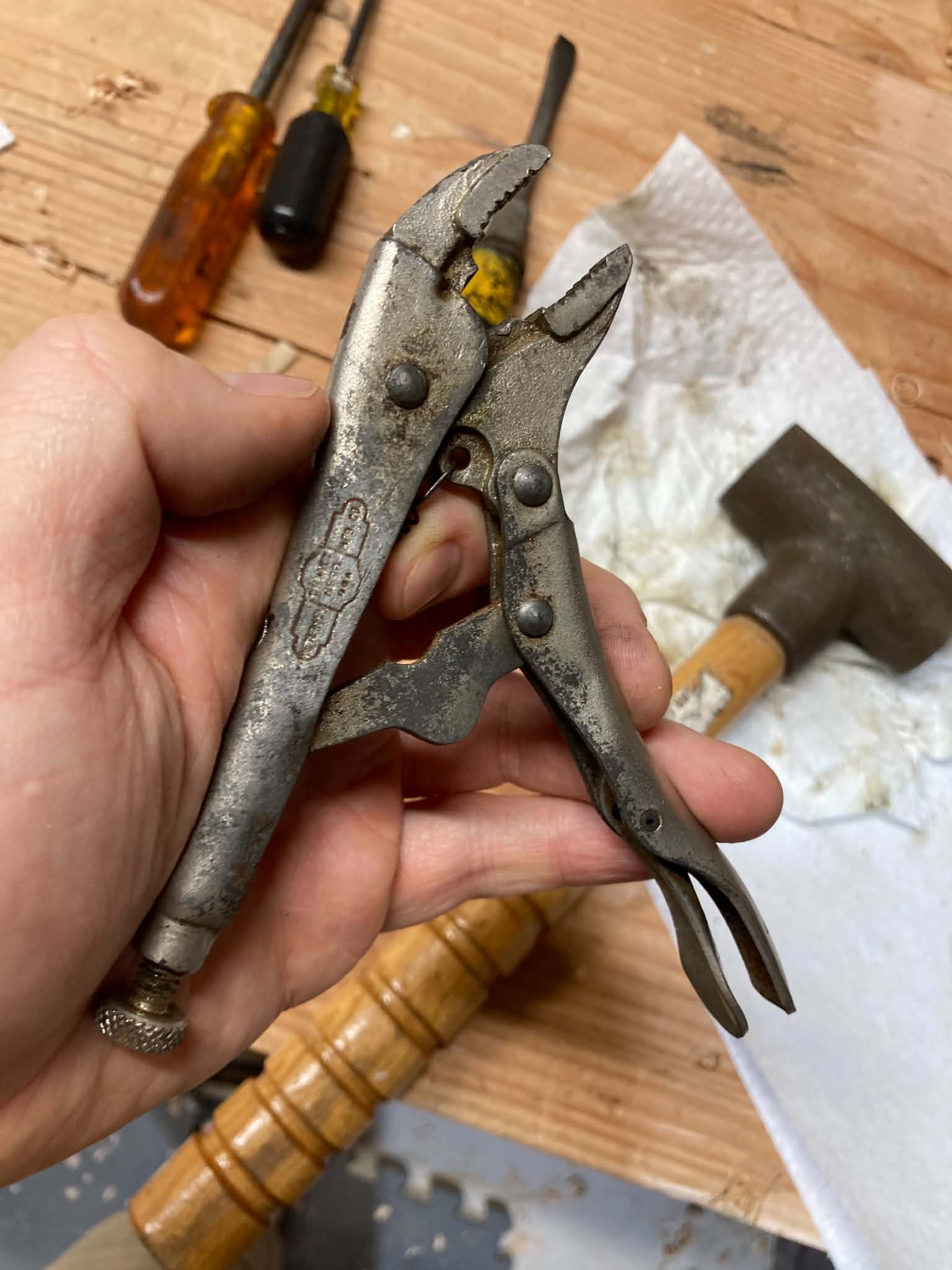
I later applied wet paper towel and plastic wrap around the parts that wouldn't fit. That was less effective.
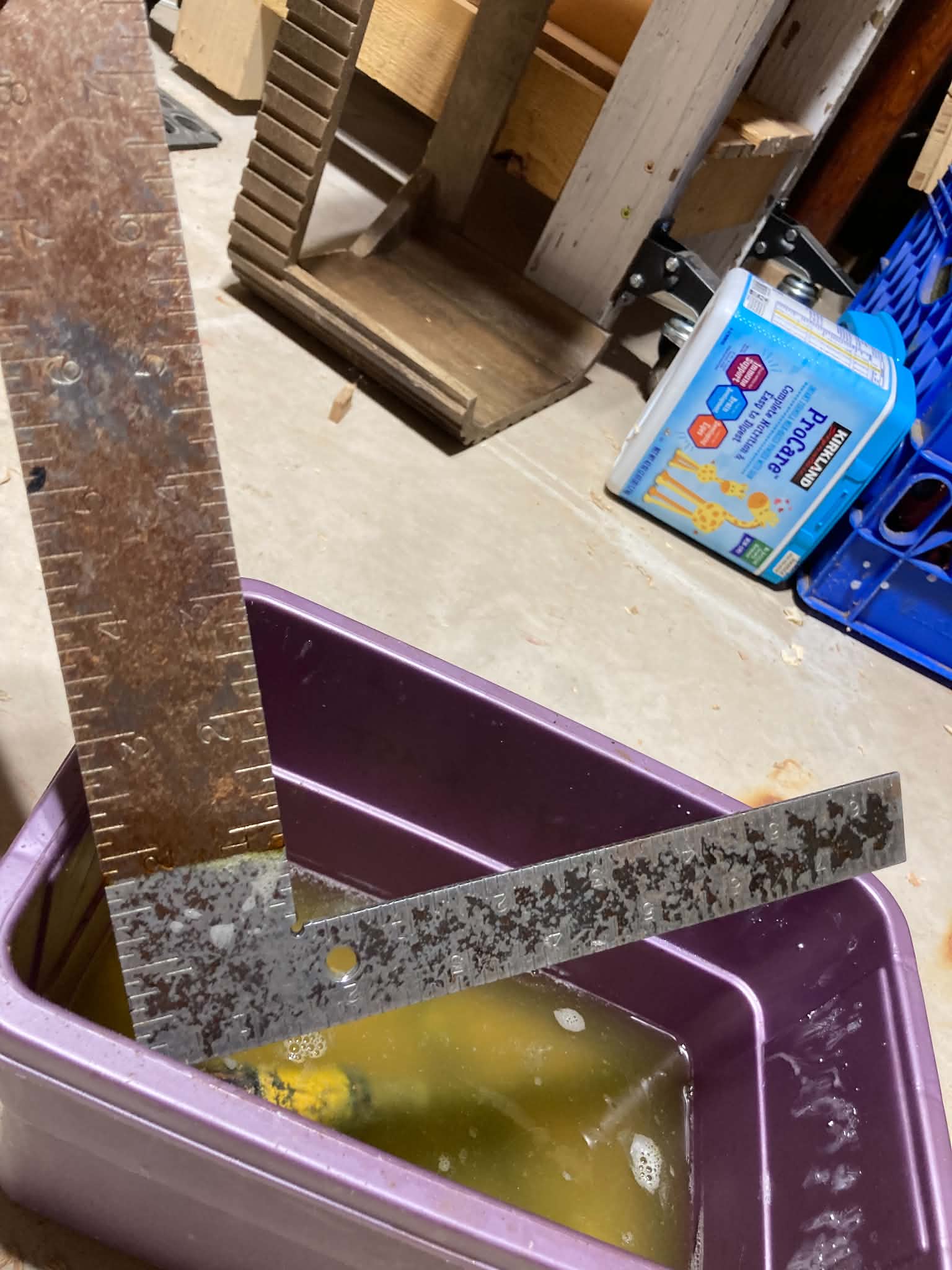
The Verdict
Overall, it was decent and by weight this is much much cheaper than Evaporust. As far as effectiveness, I don't believe it's equal. It could also be the mixture I used or the tool choices, but it seemed like it was harmful to whatever remaining finish was on the metal. All of these rust removers leave a darker finish on the metal as it's actively converting the rust (iron oxide) to something called iron tannate. However, this seemed to turn whatever other coating was originally on some of the metals, into a flaky plastic feel/look. Again, it might just be the tools I chose, but the square in particular kind of ended up looking worse off than when I began the experiment. You can see in the final photo that the pitted spots aren't from the usual rust pitting.
One area I found far less effective than Evaporust was wrapping a damp paper towel soaked in the solution around the object and covering with plastic wrap to hold the moisture in place. This might just be a poor application and it could have been as equally unsuccessful with Evaporust. I don't use that method too often.
Regardless, for the frequency I try to remove rust, and the fact that it's reusable for many more tries than Evaporust (or so the video I linked above claims), I believe this is a clear win. I will certainly make more as needed. It's also quite fun watching the chemical reaction occur when first adding everything to the water. I particularly like that the labels on the tools became more readable. I suspect this chemical composition is more harmful to the metal if left too long so I will need to see with more attempts how successful a product it is overall.